Getting the kayak to the water: racks, straps, carts and the small gear
The boat is half the purchase. The other half is getting it onto the car, keeping it there at highway speed, walking it to the water, and the five small things that make the day go well. Ten of them, with the rule behind the whistle and the light.
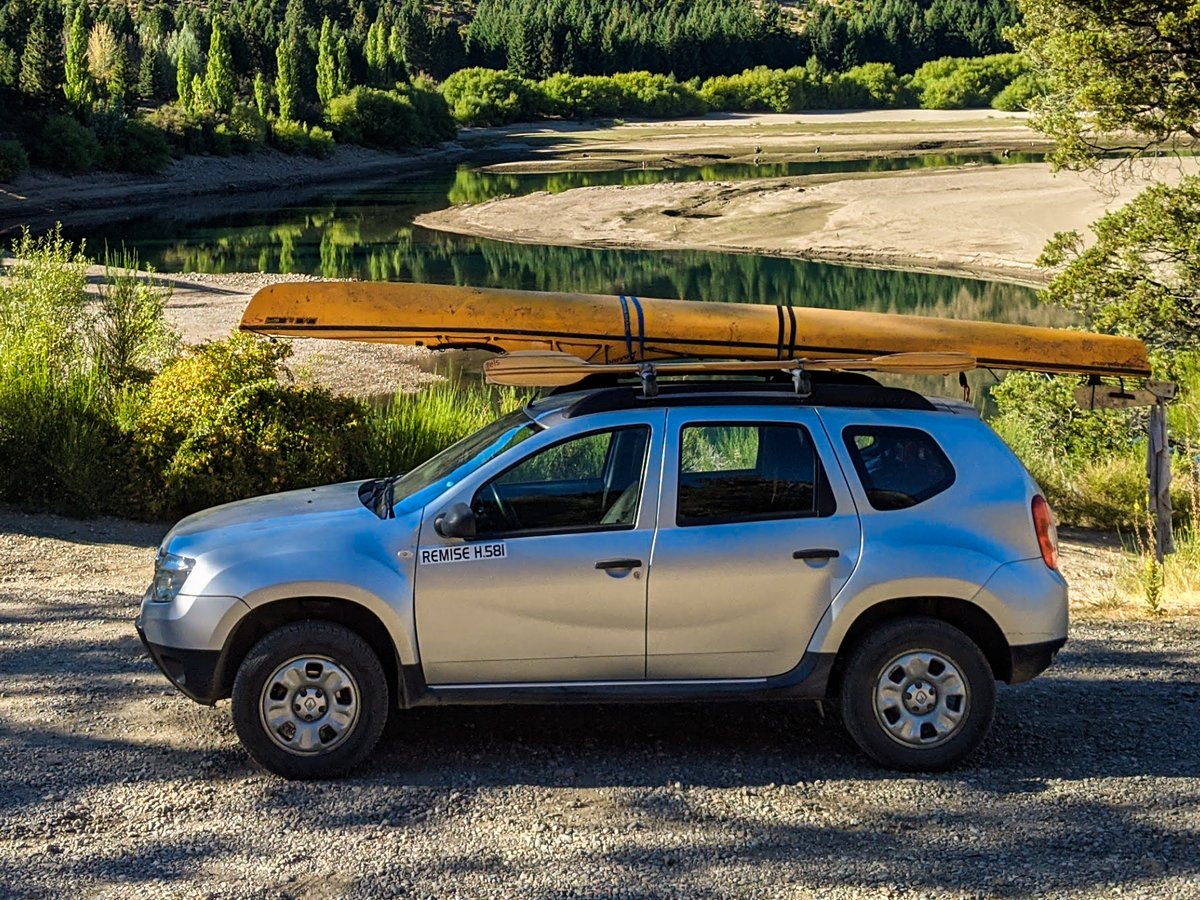
Three ways onto the car
What you have on the roof decides it. The car guide walks through loading and strapping.
Bare roof
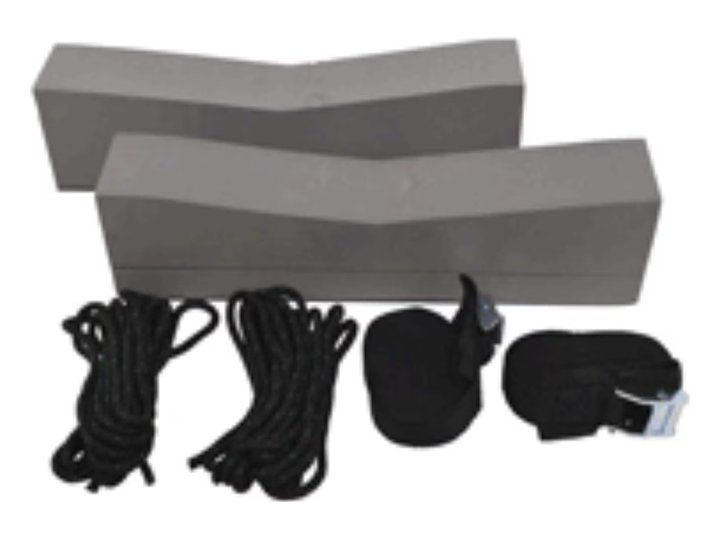
Foam blocks
Two blocks, two straps through the doors, bow and stern lines to the bumpers. Fine for one boat and a first season; slow to load.
Crossbars
J-cradle
The boat rides on its edge, which frees roof space and is kinder to the hull. One or two boats; folds flat when empty.
Crossbars, flat
Saddles or pads
The boat rides hull-down on padded crossbars. Simplest to load from the rear; takes the whole roof.
Every method
Bow and stern lines
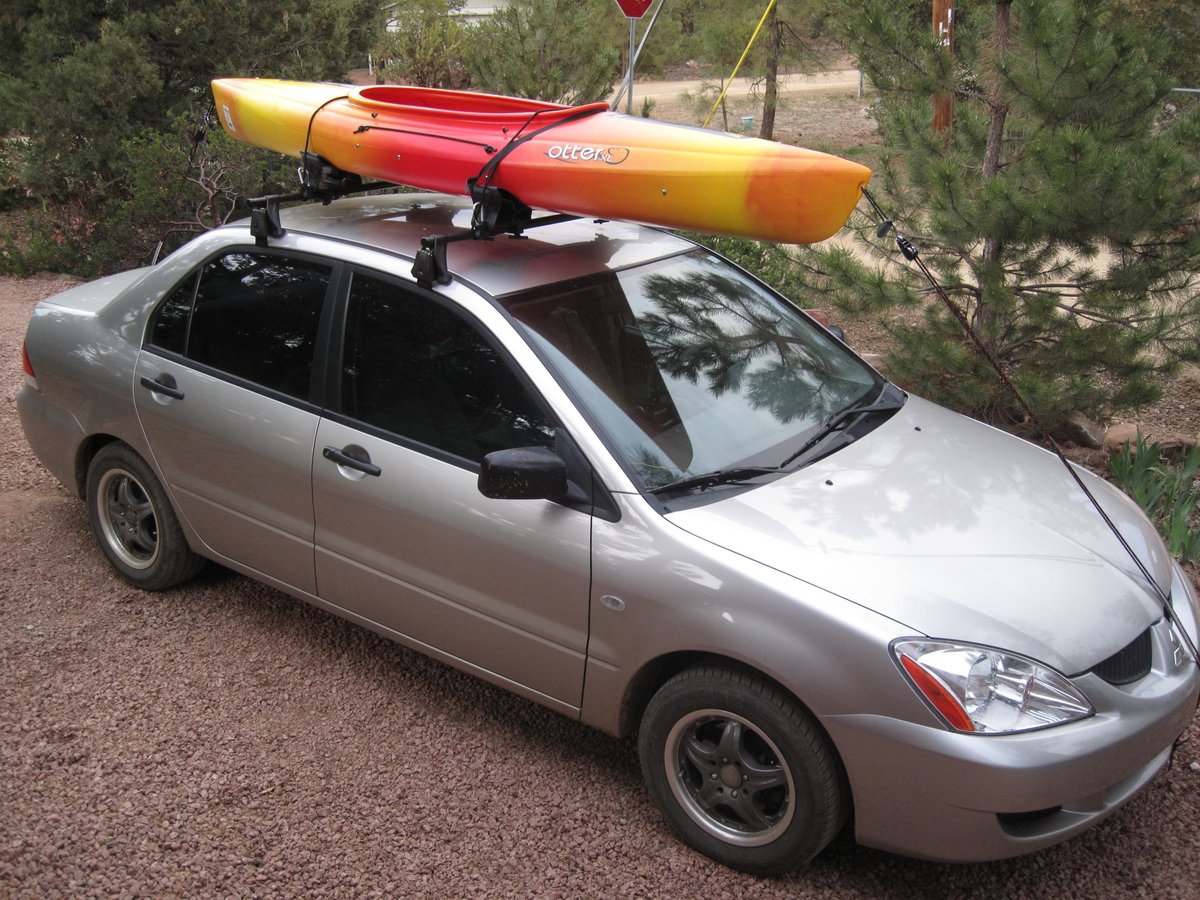
Straps hold the boat to the rack; the end lines hold it to the car if the rack lets go. NRS and Pelican both say to use them.
Quick picks
The short answer for common situations. Each links to the full card below.
Suits: A first season before buying a rack, and a rental car.
Weigh: Attwood's site blocks readers, so the specs are the maker's listing. Blocks fit a bare roof only; the bow and stern lines are rope, so add the Thule hood loops. Slower to load than a cradle and not for highway speeds without the end lines.
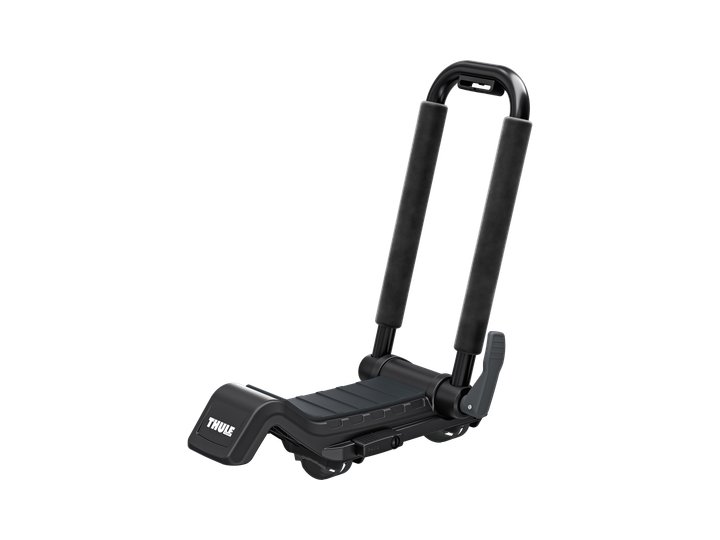
Thule's folding J-cradle: one kayak to 75 lb on its side, or two boats to 130 lb combined with the stacker position, straps and bow/stern tie-downs in the box, and it folds flat when empty.
Capacity
1 boat to 75 lb, or 2 boats to 130 lb combined
Weight
12.5 lb
Size
20 × 9 × 20 in
In the box
2 × 15 ft straps, buckle bumpers, bow/stern tie-downs
Suits: The rack for a car that already has crossbars.
Weigh: Needs crossbars. The older Hull-a-Port XT is superseded; this is the current model. Lock cylinders are extra.
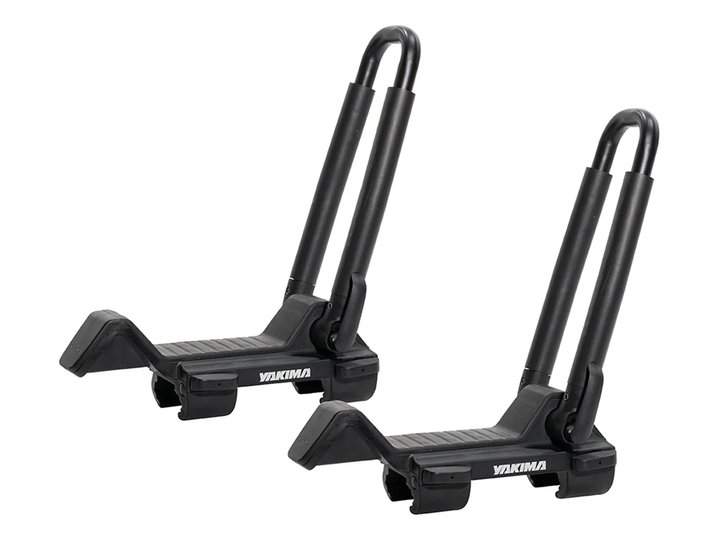
Yakima's J-cradle: one boat to 100 lb or two to 130 lb combined, folds down when empty, fits round, square, factory and aero bars, with a limited lifetime warranty.
Capacity
1 boat to 100 lb, or 2 boats to 130 lb combined
Weight
11 lb
Fits
Round, square, factory, aero bars; 27.5 in min spread
Warranty
Limited lifetime
Suits: A heavier fishing kayak on crossbars.
Weigh: Needs a 27.5 in minimum crossbar spread. Units made before February 2026 are rated 80 / 110 lb; the current rating is on the box.
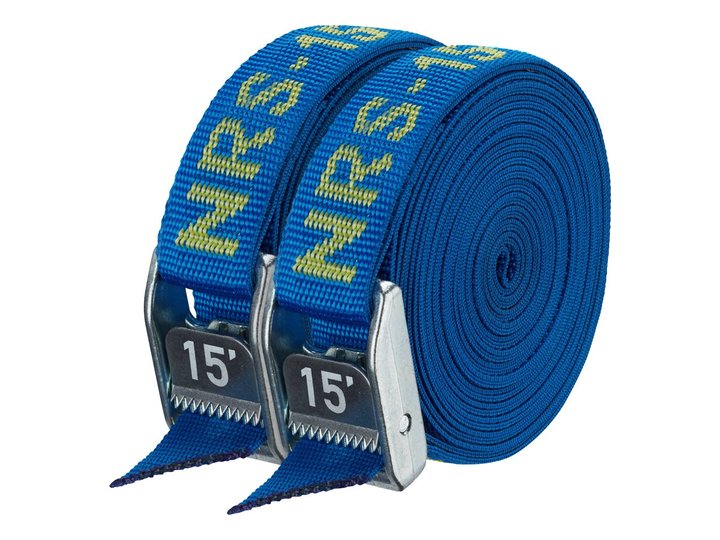
The cam straps river guides use: UV-protected polypropylene webbing rated to 1,500 lb breaking strength, a stainless-spring cam buckle, and the length stamped on the buckle so you grab the right one.
Length
15 ft, pair
Strength
1,500 lb breaking; 500 lb working load
Buckle
Stainless-spring cam
Webbing
UV-protected polypropylene
Suits: Every roof load; a second pair for the bow and stern.
Weigh: A pair; the 9 ft and the four-pack are separate listings. Sold by a third party on Amazon.
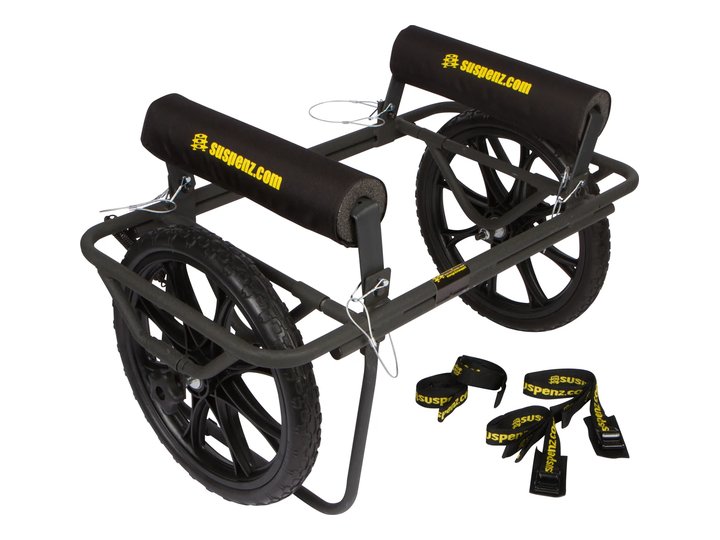
A fold-flat cart with 15-inch airless wheels and a 350 lb rating that moves a loaded fishing kayak from the truck to the water alone, with two sets of cam straps and a kickstand.
Capacity
350 lb
Wheels
15 in airless
Weight
17 lb
Folded
31 × 16 × 9 in
In the box
2 sets of cam straps; kickstand
Suits: Anyone with a heavy sit-on-top and a walk to the launch.
Weigh: Seventeen pounds itself, and Suspenz says not to store the boat on it: the airless wheels flat-spot.
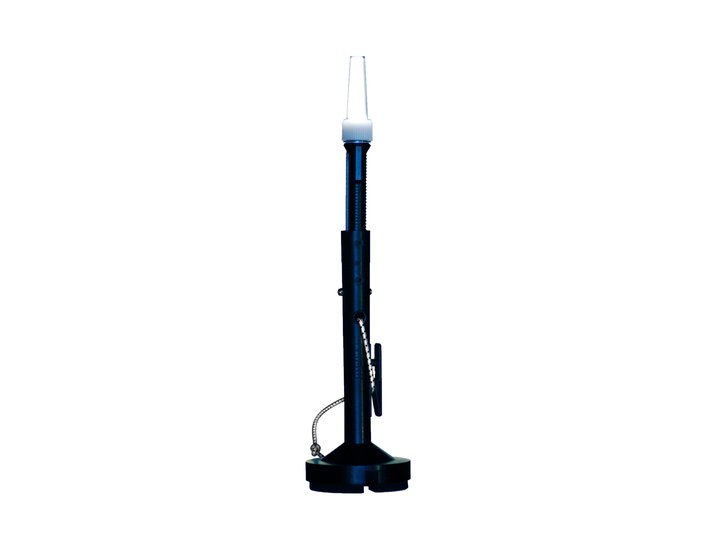
An 18-inch clip-on white light that satisfies the Coast Guard's all-round white light option for a kayak at night: two LEDs, 100+ hours on three AAs, IPX8, it floats, and it clips to any pad eye.
Light
2 white LEDs, 360°
Battery
3 × AA, 100+ hours (included)
Rating
IPX8; floats
Size
18 in; 10 oz
Mount
Steel clip + bungee to a pad eye
Suits: Anyone who fishes the evening bite or launches before sunrise.
Weigh: The rule also accepts a flashlight kept ready to show; the Kayalite is for the paddler who wants to be seen without holding anything. Made in Boston.
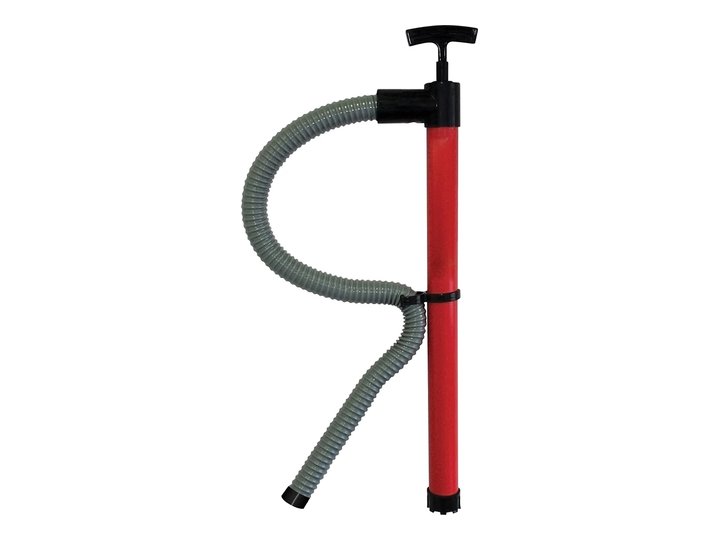
A self-priming hand pump that empties a swamped sit-inside cockpit a litre at a stroke; with a big sponge for the last inch, it's the only way to get the water out on the water.
Type
Self-priming hand pump
Weight
15.8 oz (listing)
Suits: Every sit-inside paddler. Sit-on-tops drain through their scuppers.
Weigh: Specs are the listing's; no maker page. Strap it under the deck bungees where you can reach it from the seat.
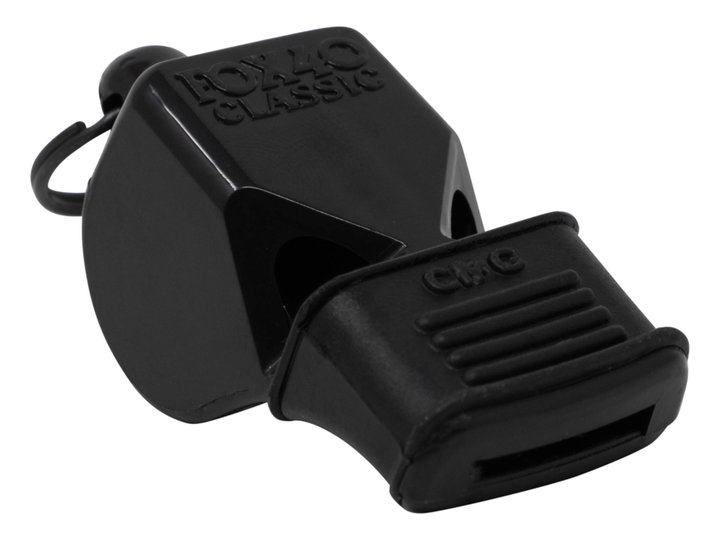
The pealess whistle that works wet: no cork ball to stick, loud enough to carry across a lake, and the "efficient sound signal" the Coast Guard rule asks a small vessel to carry.
Type
Pealess
Rule
33 CFR 83.33(b): a means of making an efficient sound signal
Suits: Clipped to the life jacket, every trip.
Weigh: Fox 40's site publishes no spec page; this is the single whistle, and the three-pack is a separate listing. Some life jackets, the Onyx MoveVent among them, already include one.
Besides the life jacket, two things. A vessel under 12 metres must have some means of making an efficient sound signal (33 CFR 83.33), which a pealess whistle on the life jacket satisfies. At night a vessel under oars must show an all-round white light, or have a flashlight ready to show in time to prevent a collision (33 CFR 83.25). A headlamp in the dry bag meets the letter; the clip-on light meets it without your hands.
Straps: snug, not cranked. NRS warns that overtightening distorts plastic hulls and stresses the rack, and a twist in the strap stops the hum at speed. On the highway, the bow and stern lines are the difference between a scare and a lost boat.